Is the Tesla Flying Roadster Video Real or AI?
Tesla's Oct 15, 2026 Roadster demo was real: a short thruster-assisted hop, not a flying car. Learn how to tell the real clips from AI flying car remakes.

4 min read
If you have opened TikTok, X or Instagram this week, you have probably seen it: a Tesla Roadster leaves a ramp, rolls through the air and lands in a cloud of vapor. Some of those clips are real. Many are not. This guide explains what Tesla actually demonstrated, why so many copies appeared within hours, and how to recognize an AI flying car video before you share it.
The short answer
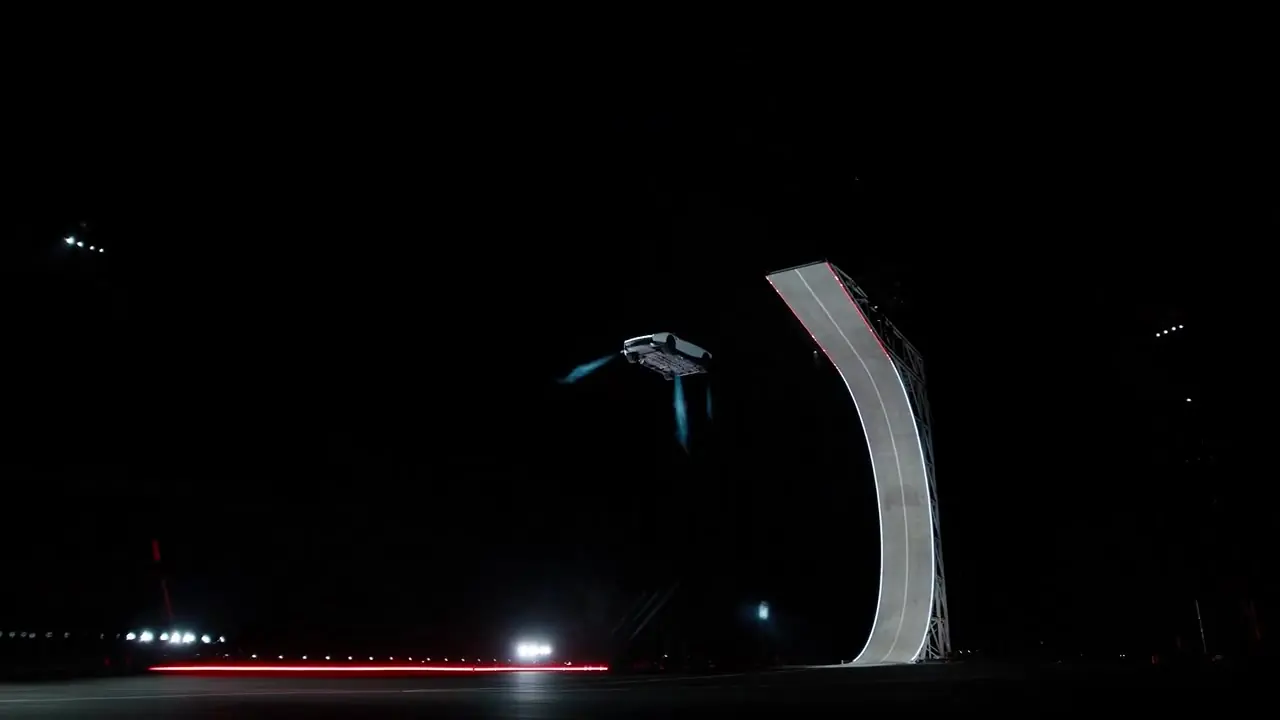
Yes, there is real footage. On October 15, 2026, Tesla showed a Roadster demonstration at SpaceX's test site in McGregor, Texas. An unoccupied prototype drove up a ramp, used SpaceX cold-gas thrusters for a short airborne hop and roll, and then landed.
No, it is not a flying car in the everyday sense. The car did not take off and cruise through the sky. It performed a brief, controlled stunt with thruster assistance and came back down. Any Tesla flying car video that shows a Roadster gliding over a city, lifting out of a traffic jam or carrying passengers through the clouds did not come from that demonstration. It is an edit, a visual effect or an AI remake.
What Tesla actually showed on October 15
The official clips are worth watching closely, because they set the baseline for everything that came after:
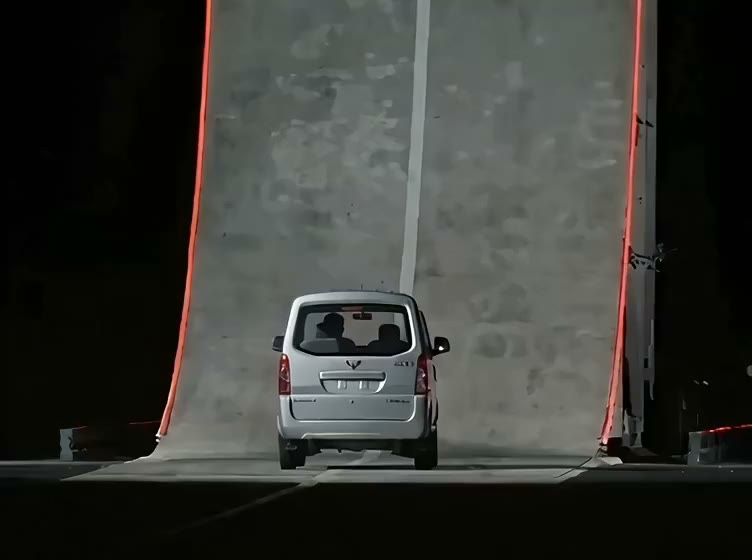
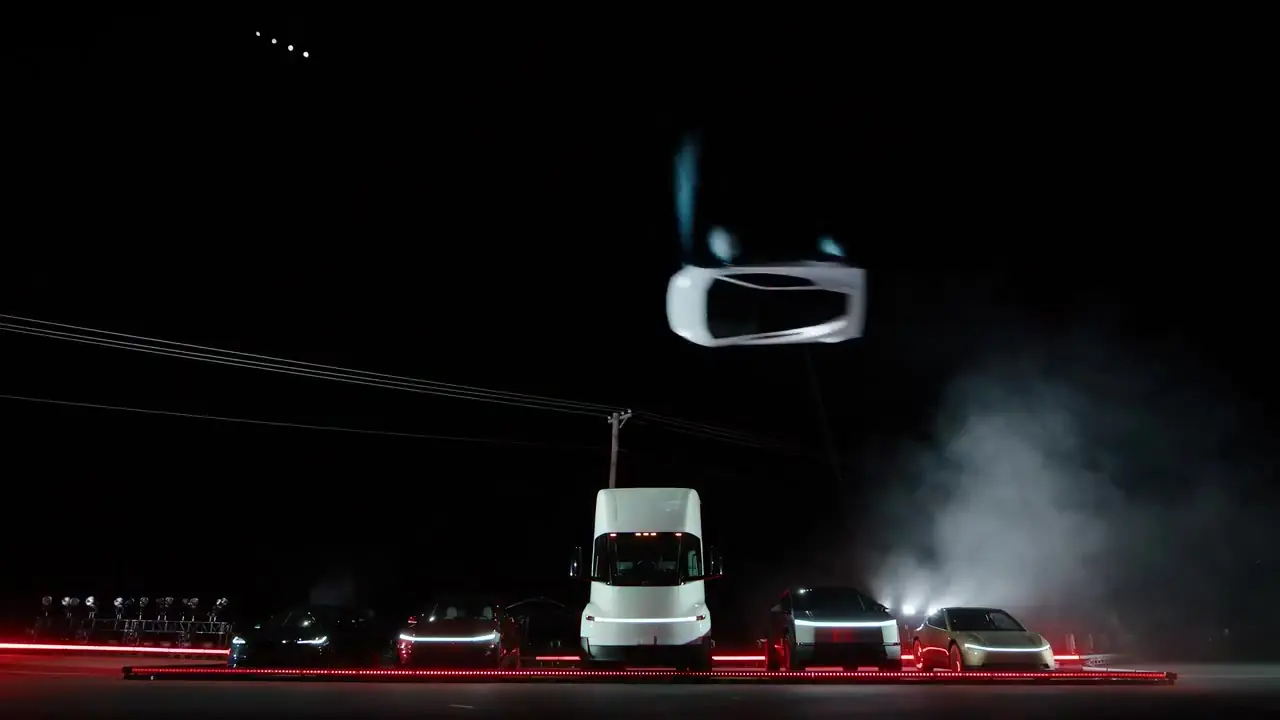
- The setting is a test site at night. Floodlights, a dark test pad, a tall curved ramp with red edge lighting and a lineup of parked vehicles that includes a Tesla Semi.
- Nobody is inside the car. The prototype was unoccupied.
- The hop is short. The car leaves the ramp or rises above the parked lineup, rolls once, corrects its attitude and settles back onto the ground.
- The thrusters use cold gas. What looks like smoke is pale vapor from the cold-gas jets, not flames or a rocket plume.
Among the clips Tesla shared is also a Track Mode visualization, in which the car lowers itself and deploys aerodynamic panels in a studio. That one is a product visualization, not flight footage.
If a clip matches these details (the venue, the lighting, the single roll, the vapor), it is most likely a repost or re-edit of the real demonstration. If it departs from them, be skeptical.
Why the clip went viral, and why AI copies followed
A car doing a mid-air kickflip is close to perfect social media material. It is short, surprising and easy to understand with the sound off. Within hours, the original clips had been cut into square edits, slowed down, zoomed in and reposted with new captions.
Then came the remixes. Current video models can take a reference clip for motion and camera movement, plus a photo of a different vehicle, and render the same stunt with that vehicle in it. That is why your feed now shows minivans, hatchbacks, pickup trucks and even horse-drawn carriages "doing the Roadster jump." It is also why a Tesla Roadster AI clip can look convincing at first glance and still be entirely synthetic.
How to spot an AI flying car video
AI video keeps improving, but stunt clips still leave clues. Look for these:
- The car changes shape in mid-air. Wheels merge, doors slide around, badges blur or the body stretches during the roll. Real metal does not melt.
- Reflections and shadows don't follow the car. On the real test pad, floodlight reflections and shadows move consistently with the body. AI clips often lose them or let them drift.
- The physics is too generous. Long hang time, several flips, wings unfolding or flames from the rear point to an edit. The real demonstration was a short, controlled hop.
- The location doesn't match. City skylines, bridges, highways and traffic jams were not part of the October 15 demonstration.
- There is no original source. Real clips trace back to Tesla's official posts. If nobody can point to one, assume it is a remix.
- Text and logos look wrong. Warped license plates, unreadable signs and flickering logos are classic AI artifacts.
None of these signs proves anything on its own, but two or three together are a strong signal.
Where AI flying car tools fit
There is nothing wrong with AI remixes, as long as they are labeled honestly. Making your own car "do the Roadster stunt" is a fun way to join a trend, and nobody is misled when a clip is presented as what it is.
That is the idea behind our AI flying car generator. You upload one photo of your car, pick one of nine stunt templates (ramp jumps, mid-air kickflips, Track Mode and more) and get an AI flying car video of 6 to 15 seconds. The result is an AI remix, not footage of your car actually flying, and the site says so plainly. It is an independent tool and is not affiliated with Tesla or SpaceX.
If you want to try it, start with the step-by-step guide on how to make an AI flying car video, or read the nine stunt templates explained to see which one suits your car.
A quick checklist before you share
- Does it match the real venue, the lighting and a single short roll? Probably a repost of the real demonstration.
- Does the car fly over a city, through traffic or for a long time? An edit or an AI clip.
- Did the creator label it as AI? Good. Keep the label when you repost.
- Made your own with a flying car AI template? Add "AI-generated" to your caption. It keeps the trend honest, and your followers will enjoy it just as much.
Videos made with AI Flying Car are AI-generated remixes, not real footage. AI Flying Car is an independent tool and is not affiliated with Tesla or SpaceX.
Back to blog